
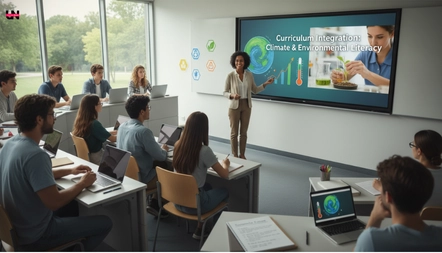
Environmental literacy is quickly becoming a top priority around the world, and today’s big policy change aims to make it the main focus of undergraduate education. Higher education officials have asked universities across the country to “embed climate-change and environmental-literacy modules” into all undergraduate programs. This is a big step that has been well received. The mandate shows a strong shift toward giving future graduates the skills they need to deal with growing environmental problems.
Climate change is happening faster than ever, so people need to be more aware of the environment so they can make smart choices in their personal and professional lives.
Why It’s Important to Be Environmentally Literate Now
Environmental literacy is no longer an optional subject in school; it is now a basic requirement for long-term growth. Countries all over the world are dealing with rising temperatures, extreme weather that happens again and again, problems with farming, and not enough water.
As places of learning and new ideas, universities are very important for creating a generation that understands how the environment works and can do something about it. The goal of this program is to give students useful, positive skills that will help them make the world more resilient to climate change.
The Most Recent News About Environmental Literacy in Higher Education
University regulators have made a strong and important announcement: all accredited schools must include “environmental literacy” in their core curricula. The goal of the program is to make sure that every undergraduate, no matter what their major is, graduates with basic knowledge about climate change and skills for living sustainably.
This proactive and forward-looking step fits with what is happening in education around the world, where climate-related topics are becoming more and more required in universities from Europe to Southeast Asia.
Academic Framework and Policy Push
The new directive says that environmental literacy modules must have:
- An introduction to climate science
- Environmental ethics
- Resource management
- Sustainable development goals (SDGs)
- Local and global environmental challenges
- Adaptation and mitigation strategies
Regulators stressed that universities should not see environmental literacy as an optional or separate subject, but as a key part of being a good citizen.
A high-ranking official said that this change “makes sure that students enter society with a positive awareness and practical understanding of climate risks.”
What Universities Should Do to Make the Change Happen
Colleges have been asked to:
- Set up academic committees to create or choose environmental literacy modules
- Work together with environmental experts, NGOs, and climate research groups.
- Include ideas about sustainability in labs, fieldwork, and projects in the community.
- Include activities that raise awareness of climate change, such as greening the campus, cleaning up trash, and saving energy.
Schools that teach engineering, business, medicine, and the humanities have been told to put environmental literacy in the context of their own fields.
For instance:
- Engineering programs might include infrastructure that can handle climate change.
- Business schools might add modules on sustainable finance and ESG.
- Climate-related health risks may be a big part of medical programs.
- Classes in the arts and humanities may look at climate justice and stories about the environment.
Climate-Focused Curriculum – Expected Impact
Adding environmental literacy to every undergraduate program will have a lot of good effects, both in school and in society.
Good things for students and society
- More awareness of climate change
Students will learn about climate science, environmental policies, and ways to be more sustainable. These are skills that employers are looking for more and more. - Being Ready for Work
Industries now want graduates who are skilled in ESG standards, green technologies, disaster management, and following environmental rules. - Better Critical Thinking
Environmental literacy makes students look at global problems, look at scientific data, and think about how people and the environment interact. - More Civic Responsibility
People who know more are more likely to recycle, save energy, and save water. - Helping with National Policies
A youth population that is aware of climate change can help the country keep its promises to the SDGs, carbon-reduction efforts, and protecting the environment.
Overall, the program is expected to make people and organizations more environmentally friendly.
Problems and Concerns of Institutions
Even though the response was good, some colleges were worried about:
- The cost of setting up labs and field activities
- The need for new research resources
- The availability and training of faculty
- The curriculum being too full
Regulators have promised schools that they will be able to be flexible with their academics, and the model syllabus can be changed to fit the needs of each university’s infrastructure.
Authorities also told universities to work with environmental groups, climate experts, and government departments.
A Global Look at Environmental Literacy
The change is in line with trends in international education. More than 50 countries now require environmental literacy classes at the undergraduate level, according to research groups around the world.
UNESCO has repeatedly told its member states to make Education for Sustainable Development (ESD) a required part of higher education.
As climate threats grow, environmental literacy is seen as an important skill, along with digital literacy and communication skills.
The Pakistan Meteorological Department sends out regular research reports and climate updates to give you more scientific information and insights into climate change. Do Follow Link:* https://www.pmd.gov.pk
Conclusion
Adding climate change and environmental literacy modules to all undergraduate courses is a strong and hopeful step toward creating a generation that is ready for climate change. By making environmental literacy a part of all their programs, universities will not only improve their academic programs, but they will also help the country reach its sustainability goals and the world’s environmental commitments.
Experts think that this program will change how students think about environmental responsibility in a positive way over the long term. It will start in schools in the next few months. Now that environmental literacy is seen as an important part of school, the next generation is better prepared to lead society toward a more sustainable future.
Stay connected with Update News for news you can rely on!